Mum

October 13, 2019

Last Sunday I left the house at a little after 8am to cycle from my home in Penarth over to Cardiff. It was the day of the Cardiff Half Marathon, which I was participating in for the second time, raising money for cancer research at Cardiff University, for reasons that will soon become obvious.

The air was clear, the sky was blue, the sun was bright. There was still a slight chill in the air, though you could tell it would be warming up quickly. I cycled out of Penarth and over the Barrage which on a good day is a lovely ride, and it was a really good day. You’re surrounded by water on both sides: to the left you have the lake of Cardiff Bay and to the right the Severn estuary. If you’re lucky the Severn isn’t as brown as usual, but even when it is, it’s nice to be looking out over the water to the English coastline a few miles away, especially with the sun reflecting back at you. It felt beautiful, and the day had an air of positivity. As I left the barrage and headed up Lloyd George Avenue towards the city centre I passed groups of runners all heading towards the Half Marathon start line, all of us carrying that mix of excitement and nervousness before a big event.

Meanwhile, 120ish miles away in a hospice on the outskirts of Shrewsbury my mum died.
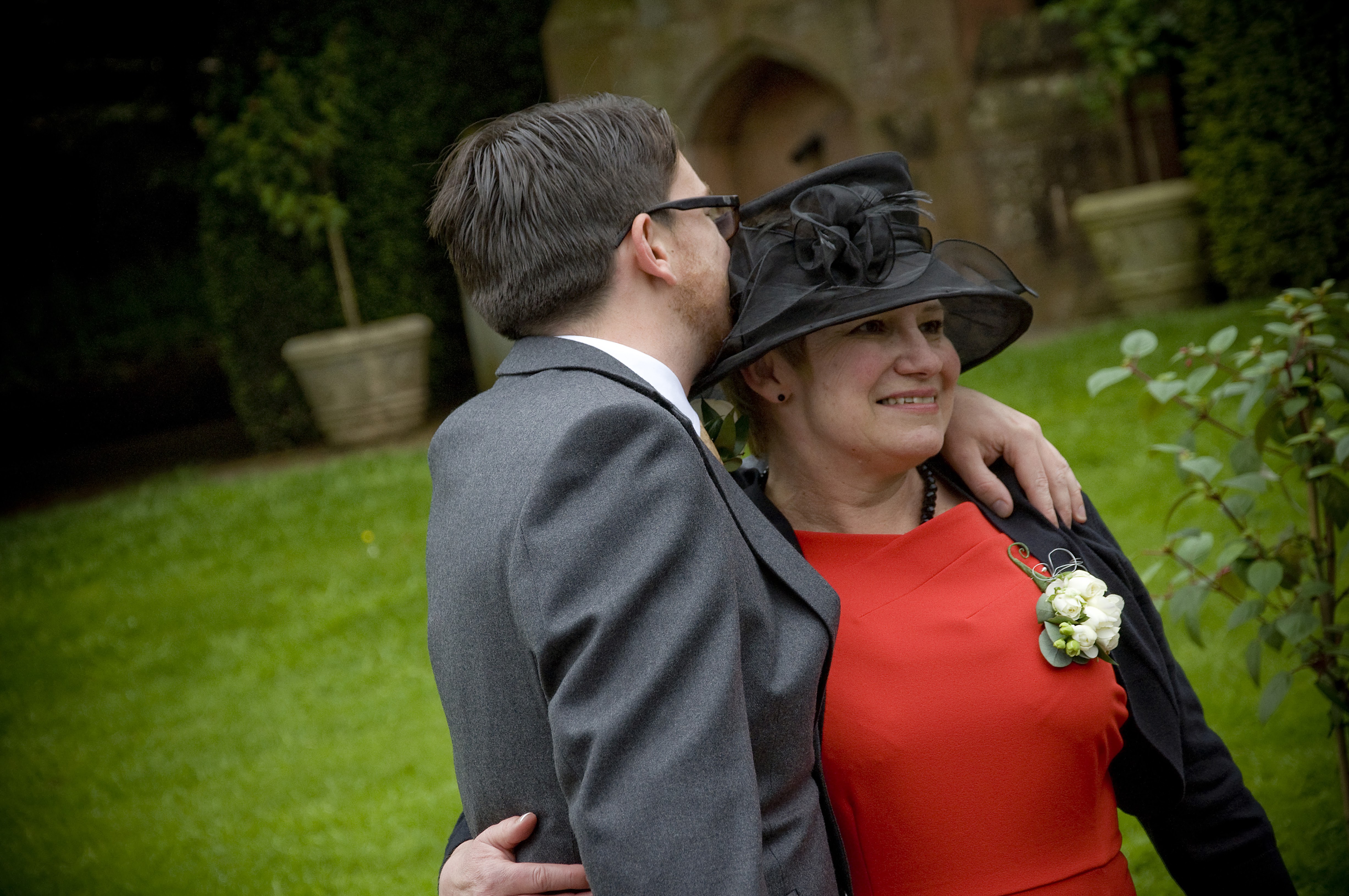
Mum and Me

Mum raised me and my sister pretty much single-handed for an awful lot of our childhood. My parents divorced when I was around 5 years old, and though my Dad wasn’t exactly ‘absent father’ he wasn’t really that present either, beyond the few hours on a Sunday when he’d take us off bowling or to some other part-time divorced dad & kids type activity. So mum did most of it, supported by her parents I suppose, and the occasional boyfriend. She worked full-time at the local sixth-form college, and I never really knew what her job title was, but it had something to do with ‘reprographics’, a job that I suspect does not exist any more. This was back in the late 80’s early 90’s, so we’re talking full-on recession and ridiculous interest rates, when even a full-time job wasn’t really enough to keep us afloat. She often worked more than a full-time job; heading out in the evenings to teach IT evening classes, or working weekends manning the sales office at one of the housing developments being thrown up around the Shropshire countryside by the company her boyfriend at the time worked for.

I have no idea how she did it.

We both work full-time and we have two kids and we are both knackered. I cannot fathom how on earth she did it on her own for so long.

As we got older she went to University part-time, getting herself an MBA, studying mostly at night at a University of Wolverhampton campus just down the road in her home-town of Telford. At the time I knew she was working hard to get the degree, but it was only when I finally got to University myself that I really understood the effort it had taken for her to manage it. Again, a feat accomplished while working full-time and looking after two children. And I know loads of people do it, but that doesn’t make it any easier. A few years ago as I was coming to the end of my PhD my wife embarked upon a part-time law masters while also working full-time, and it nearly ended us both, and we didn’t even have anything to look after at that point other than a goldfish. For mum to accomplish what she did was impressive. To accomplish what she did without moaning or complaining was beyond impressive.
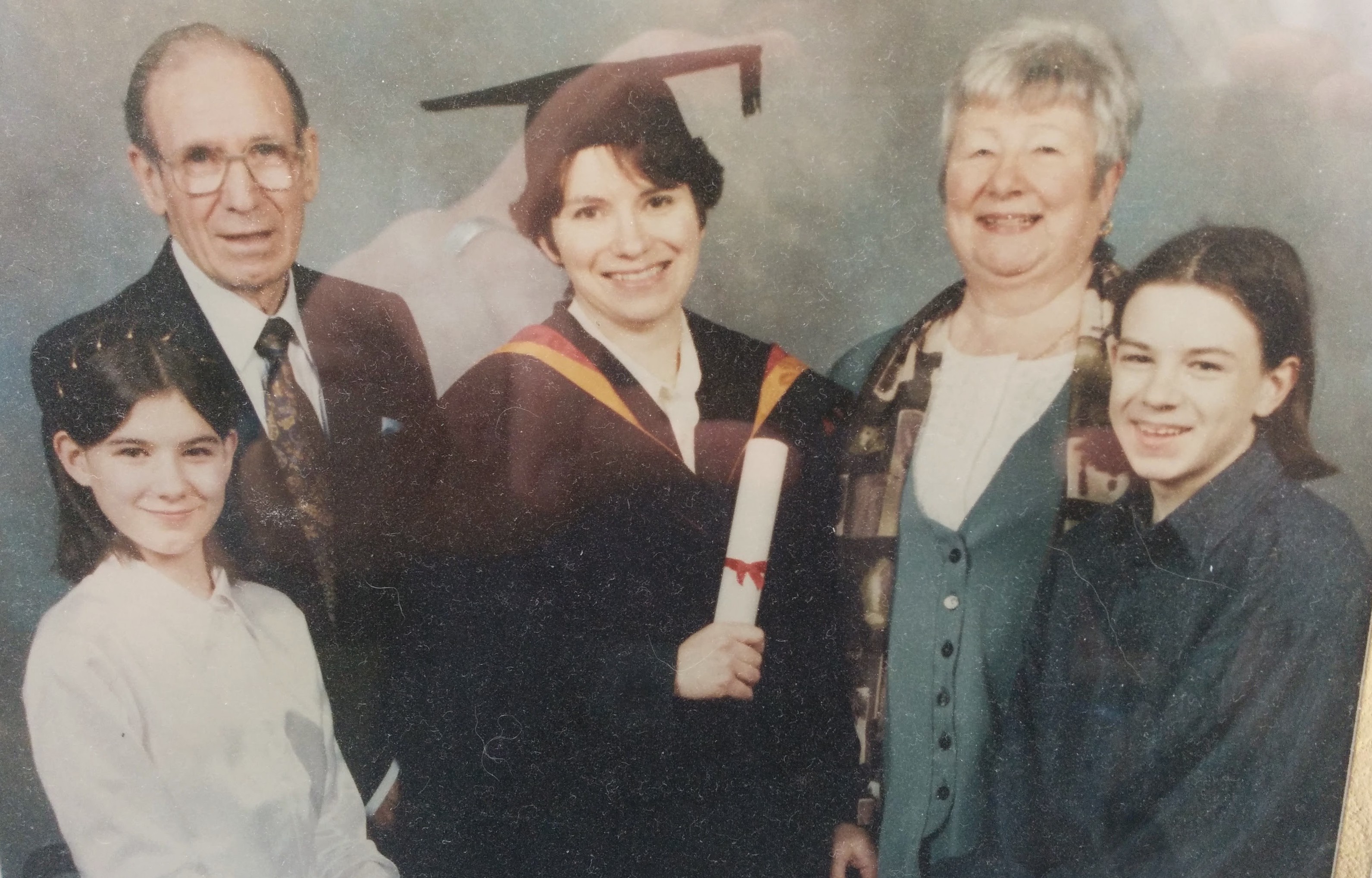
Mum graduating

She wasn’t always brilliant, and she wasn’t perfect of course. One of her weaknesses was an inability to deal with people throwing up; bad news when raising two teenagers in a provincial market town in the days before Challenge 25. She just could not cope with the vomit. And of course, as a teenager I fell out with her in numerous ways, for stupid reasons and good reasons. That’s what teenagers do, I assume. She was always mum though, and it was always alright in the end. And I grew up and stopped being a hormonal dick and it turned out she was still there waiting for me at the end of an evening out. As long as I wasn’t being sick.

I have a lot of memories of spending time with her travelling to various university campuses trying to decide where to go. She liked Birmingham. I liked Cardiff. I ignored her advice. By the time I was going off to University she had moved on with her career and was now working as an IT trainer/consultant. Her work meant that she travelled a lot, and fortunately it brought her to South Wales with some frequency, so we were able to meet for lunch quite often, or she would come and stay with us overnight rather than sleeping in a travelodge. She moved between companies a few times as she got older and I would always be a little sad when she went to work for someone with no customers in the area.
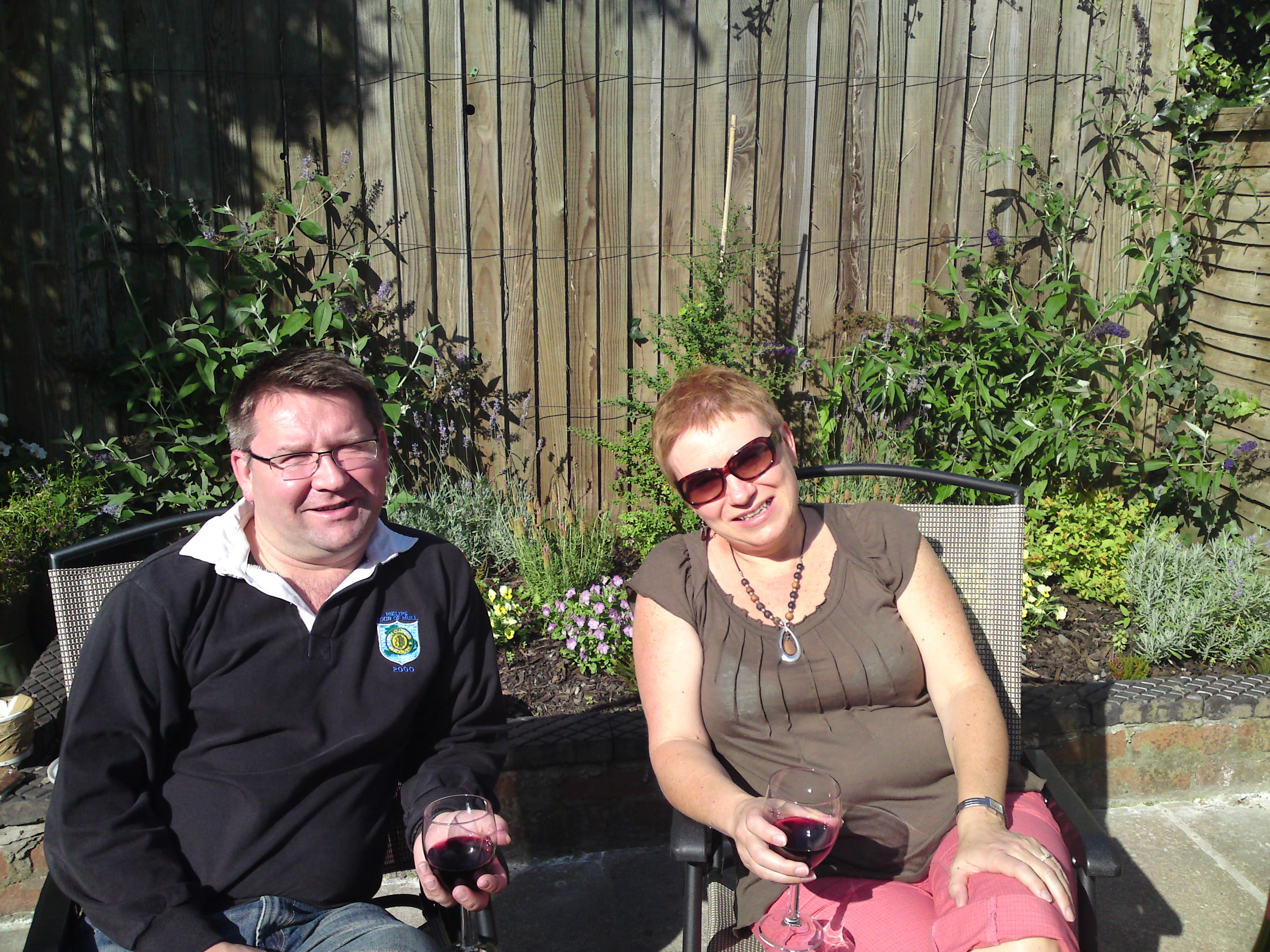
Mum and Ed

She re-married eventually, to Ed. Ed’s a man whose politics are completely wrong and at the other end of the spectrum to mine, but whose heart is fundamentally in the right place. Ed loved mum, and she loved him. They had many happy years together, living what seemed to be a comfortable double income no kids life that mostly revolved around pubs and wine. When our children came along they ended up with three granddads, because that’s how families are. And my mum knitted them little hats, and cardigans, and teddy bears. And when I asked her to knit Arthur a hat that made him look like a fox, she made me one too so that we could match.

My mum was brilliant, and I love her.

My mum was diagnosed with kidney cancer in April this year. By the time they caught it there was a tumor on one kidney, and the artery connected to the kidney, and it also looked like it had spread to her lungs, so we were already in ‘oh shit’ type territory. But, there was hope that with an operation and some treatment, we could have a few more years left with her. Over the course of the next six months she had a kidney removed, waited to recover a bit before starting treatment, had a course of immunotherapy that messed her about quite a bit, and we were then very quickly into the realm of “well, I’m afraid this isn’t going to work, so there’s not a lot we can do beyond making sure this doesn’t hurt too much”. She went in to the hospice ‘to try and get her breathing stabilised’ a week before she died, where things quickly progressed from “I’ll be out in a bit” to “I’ll not be out, but I’ll be around for a few weeks” to “She’s got days” to finally 7 days after she went in: “She’s got hours”.

I saw her a lot this last year, though not as much as I would have liked. At lot of her problems in the last few months were connected to her chest, and either I or the kids were always full of a cold or some other chesty-type lurgy, so while there was still hope we didn’t want to be bringing her any new bugs to contend with. That caused a few trips home to be cancelled. But I saw her fairly regularly, and spoke to her more often than I had. Recently I was on a training course and during a particularly reflective session the facilitator was discussing the death of his own mother and reflecting on the things that were left unsaid. It stuck with me, and I made sure to tell mum everything I thought she needed to know before the end. I am grateful for that. I got to say all the things that needed to be said.

My final visit to see her was last weekend. I drove up on Friday evening, and got to Shrewsbury at about half-nine. By this point she was pretty well out of it, and we were basically expecting her to go at any moment. I spent some time with her on Friday, both with my sister and alone, and then spent several hours by her side on Saturday with my sister and stepdad, as a number of friends popped by to say their goodbyes. Nobody was really sure how long she had left, so I was reluctant to leave, but I felt I had to run the half.

I’ve got a history of running in the not too-distant past, but I’d not really run seriously since I last ran the half in 2016. A mixture of laziness and tiredness from children had led to me losing a lot of my running fitness over the last three years. In April I was visiting Shrewsbury at the same time as a good friend, who convinced me to go to parkrun for the first time. I did, and really enjoyed it - it sort of rekindled my love for running, in a way that the few 3/4km solo runs I’d managed in the last year really hadn’t. By a strange coincidence, that was the same visit to Shrewsbury where my mum told me about her diagnosis. It’s not that I overreacted (I did), but within a short time frame I had decided that now I was officially a runner again I should enter the Cardiff half to raise money for cancer research. So I did. Six months of training followed, and unlike the last time I was running seriously, this time I had a more powerful motivation. Running was an outlet; somewhere to put my anger and grief. The emotion I might in an earlier time have buried under a couple of strong beers I instead pounded into the pavement, each step bringing me closer to the acceptance we all must find when these things happen. Several hundred kilometres of pseudo-running-therapy had led to that one race, and several very generous people had donated enough to put me well beyond my fundraising target, so it was never on the cards that I’d skip the run.

Saturday afternoon came, and my mum was still going. She wasn’t going to make it easy on me and go before I had to. I said goodbye to her, knowing as I did it that unless some sort of miracle occurred it would be our last goodbye. Needless to say, it was an emotional afternoon. I drove back to Cardiff, expecting at any moment to get the call to say she’d gone.

No call came.

So I ran the half. I ran it faster than I’d planned, and faster than I really should have. On the way round whenever I was too tired, I thought of mum, and it kept me going, pushed me onwards. At the start I’d hoped to keep up with the 2 hour pacers - it would be faster than I’d ever run the distance - but by 2 kilometres in I’d left them behind. I knew it was silly pacing, but I wanted to go for it. I paid for it as I knew I would; by the time I got to 11k it was hard going, and by 14k I was concerned about making the distance. But any thoughts I had of quitting were quickly replaced by thoughts of my mum, and how much I wanted to finish the run for her. Given the role running had played in my dealing with grief and sadness over the last six months, part of me had been moderately concerned about what would happen when mum was gone. Would I still want to run? Emotions have powered me to quite a few PBs in the last few months, but this run was different. I wasn’t feeling angry anymore, I wasn’t overloaded with the grief and the sadness. I was happy. Foot in front of foot, and despite the tiredness and the aches and pains, I was happy. I knew that mum’s journey would soon be over, but that it was okay. So I ran the half.

I crossed the finish line. I’d smashed my time. I wandered through the post-race crowd in a bit of a daze, and had a not-insignificant cry as I did so. You see people crying after races sometimes. I assume some of them are just crying with joy at having done it, but I realise a fair few are probably just like me, overcome with emotion because of their reasons for running the race.

I got home and Lisa greeted me on the stairs and I knew then that mum was gone. Arthur confirmed it in fairly short order, with the bluntness that only a four year old child has when delivering bad news. His mum had literally just ten seconds ago told him to let her discuss things with me, but like all good sons he ignored the advice of his mother and did it anyway. It didn’t really matter, because I already knew. I’d known since Tuesday of that week that she was going to die on the day of the half marathon. I’m not a spiritual person, and I don’t have any religion, and I don’t believe in a higher power; but on my run in to work on Tuesday I’d suddenly realised that of course that was the day she was going to go. I didn’t know why, but I knew it was what would happen. So I knew I had to run.

It turns out she’d passed away earlier in the morning, before the race began, at around about the same time as I was cycling across the barrage and thinking about how much of a beautiful day it was. My stepdad had thought about whether to tell me before the run and decided against it, a decision I completely agree with. I don’t know what would have happened if he had. It doesn’t really matter. She died, and I ran. We raised a chunk of money for research. Along the way I re-kindled my passion for running, and as soon as the little niggle I picked up last weekend has healed I’ll be putting the trainers back on and getting ready for the next one.

Next time I’ll be raising money for Severn Hospice, the fabulous people who looked after mum so well for the last week and a bit of her life.

My mum was brilliant, and I love her.
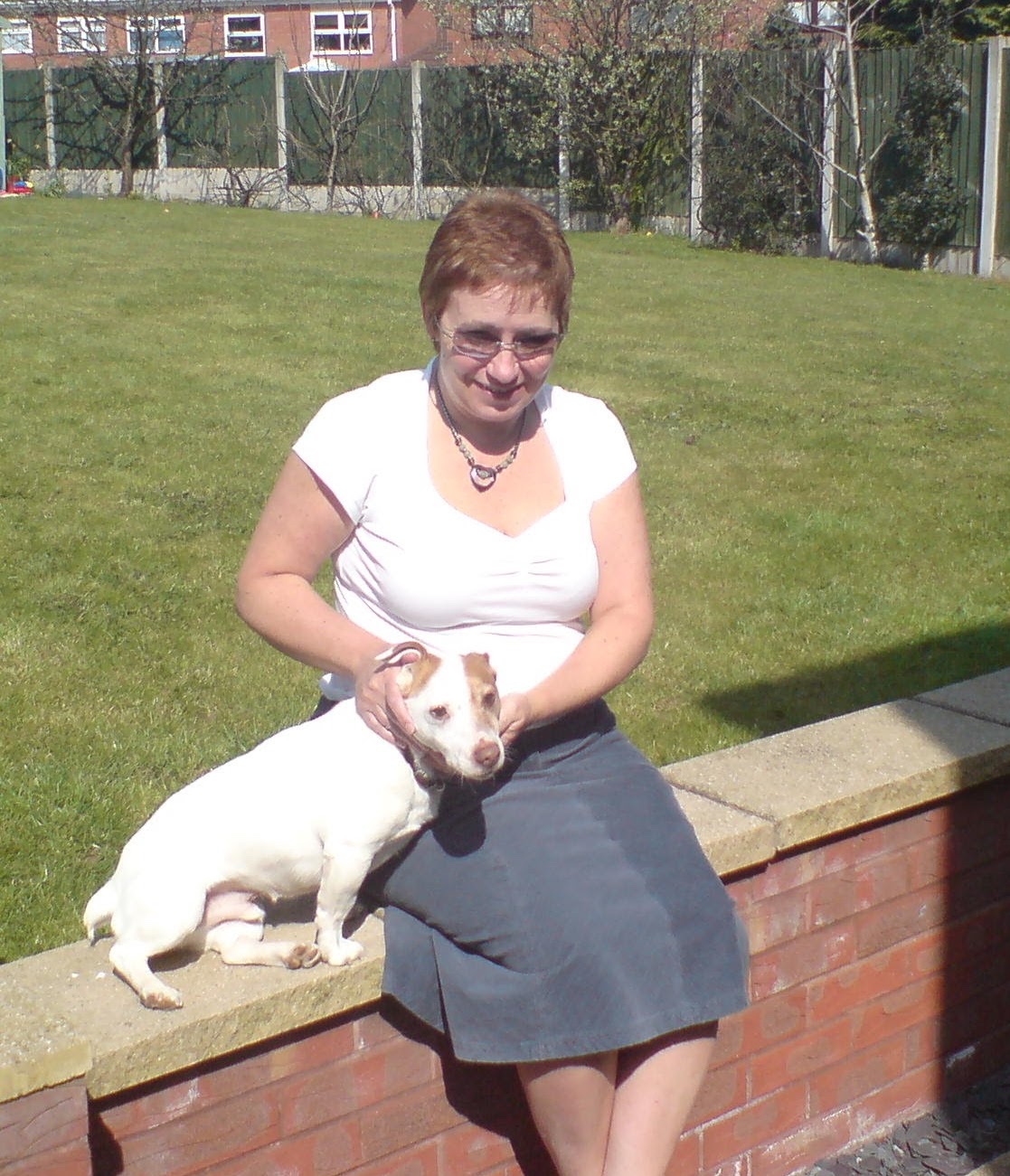
Catherine 'Cate' Anne Myatt (nee Chorley, nee Bytheway) 1961 - 2019

WJEC Paris

July 12, 2019

Me in Paris for WJEC

Just a few days after a very successful datajconf I hit the road again, this time to head to Paris for the World Journalism Education Congress. An entirely different sort of conference, this aims to bring together educators from all over the world to discuss the past, present and future directions of Journalism education. The conference is big, with over 500 attendees, and has been running for over fifteen years (although it actually only takes place once every three years, so is on its fifth edition).

It was interesting to be attending an education conference outside of what I’d consider my usual area. I wasn’t the only Computer Scientist there (in fact there were a number of us), but of course the main focus was on general journalism education, and I’ll be the first to admit that while I have a good amount of knowledge of the area, I’m not an expert. However, the issue of Data Journalism (and to a smaller extent Computational Journalism) education loomed large over many parts of the conference, and on that topic I do have a very good amount of knowledge. We’ve been teaching in this area for over five years now, and it was great at the conference to be able to talk to other educators who’ve been teaching in a similar area to have our experiences and approaches validated. It was also very interesting to be able to contribute to discussions at the conference from a position of expertise, particularly in being able to help other people who were looking to start similar programs, or who are wanting to begin covering data journalism in a wider context in their own schools. I spent some time working within a syndicate looking at Data and Computational Journalism education, starting to move towards an understanding of the skills that are needed to be covered ‘as a minimum’ if you’re going to cover these areas within general journalism education. I was pleased to be able to introduce the idea of computational thinking to a number of educators, and to discuss the ways in which it can be useful as a thought process outside of computer science, and how well it maps to some of the processes involved in journalistic investigation and data driven journalism.

In fact, many of the conversations at the conference made me realise just how cutting-edge our MSc Computational and Data Journalism is, and how important the skills we teach are. A number of employers spoke to me about how they need people in the newsroom with the abilities that you get from our course, and many more other educators mentioned how they wish they could convince their own school to create a similar programme.

We’d actually had a paper accepted to the conference, presenting a reflective look at the first five years of the CompJ MSc. I’ll post more about the talk I gave (and the slides!) in a future post, but the talk went well and we had some interesting discussions afterwards. Unfortunately, the paper sessions were in my opinion some of the weaker sessions in the conference. There were many many parallel tracks going on at the same time, so that the audiences tended to be very small. At the same time, the conference app (which was very cool) only listed titles for the papers in each session, so it was hard to know what each session was going to be about, and in many cases the theming tended to be quite loose (maybe even a bit random!), so that papers in the same session didn’t always have a lot to do with each other. Still, with the number of submissions, papers and contributors it’s a massive logistical challenge to put such a programme together, so I think a little leniency is allowed!

Overall it was a really great experience. I met some lovely new people, caught up with a few old acquaintances, and I look forward to working more with them in the future.

DataJConf III

July 5, 2019

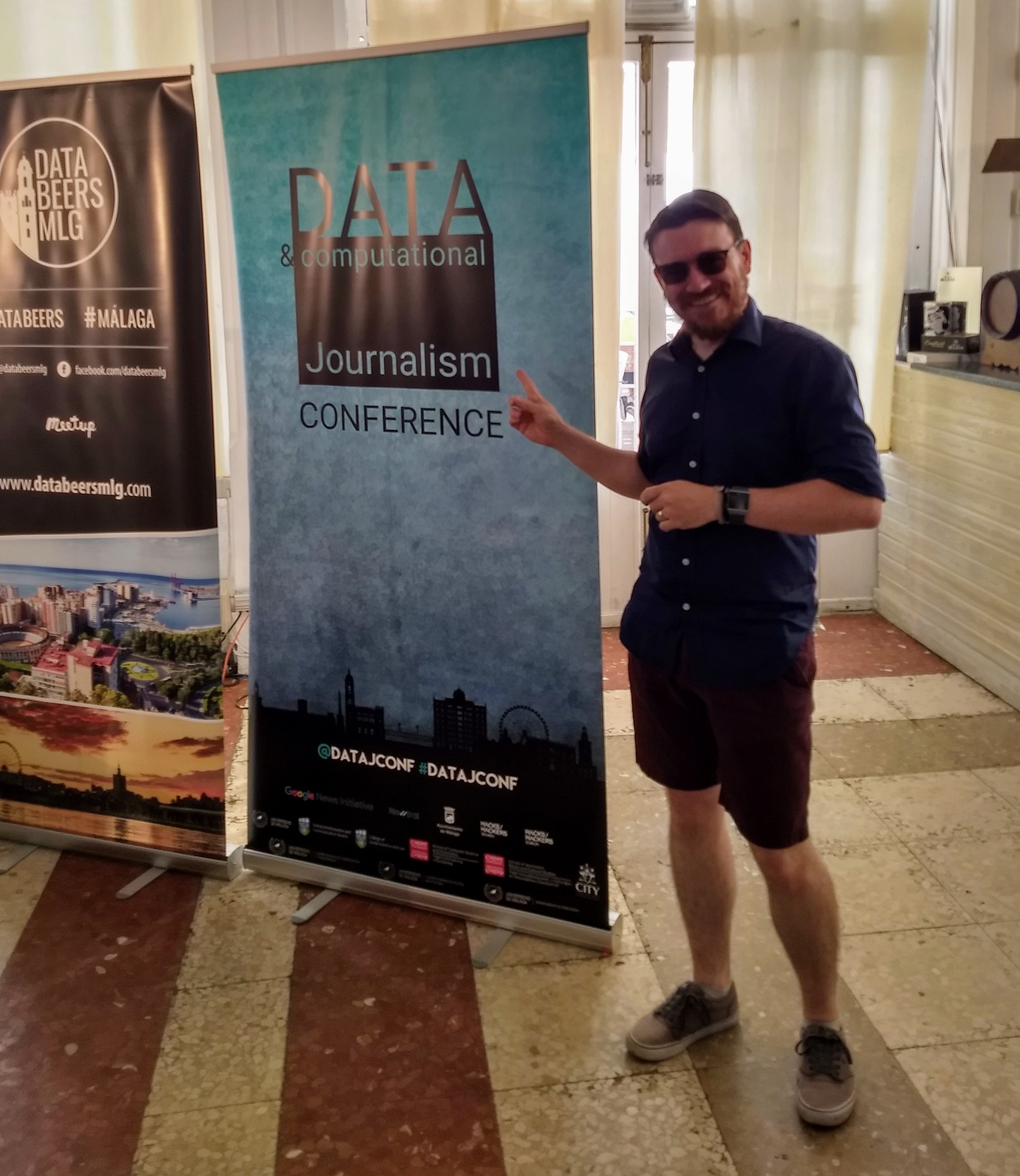
Martin in Malaga for DataJConf

Last week we held the third edition of the European Data and Computational Journalism Conference in Malaga, Spain. This is the conference that Glyn, Bahareh and I run, which started in Dublin in 2017, had a second edition in Cardiff last year, and has now embarked upon a journey around the European mainland. It was a fantastic event, with around 100 attendees representing different organisations from across industry and academia, and from 14 different countries. As with last year we had a first day presenting a mix of industry and academic talks, and a second day with a focus on more practical workshops and tutorials.

When Bahareh initially pitched the idea of running a conference in this field one of the main drivers for us was to encourage a mix of industry and academia, as we think the conference can be more useful this way. It has been a great pleasure to see this happen over the last three years, with both academics and practitioners putting forward talk proposals, coming along to the conference, and starting what I hope are interesting and fruitful conversations. By not splitting the conference into ‘industry’ and ‘academic’ tracks we’re able to ensure that all involved in data and computational journalism get to see all sides of the field, and this is a really positive outcome for the community. I’m excited to see some collaborations starting to happen that may not have happened if people hadn’t got together at the conference, and I think this is really one of the key benefits of this conference as a venue.

There were some truly interesting talks on both days, and some very interesting practical workshops too. Our keynotes, Daniele Grasso and Meredith Broussard did fantastic jobs of opening and closing our first day of talks. Our local hosts did a spectacular job with the organisation. Bella and the team put together a local program that was welcoming and inclusive, and showed off Malaga to its fullest. We as organisers all agreed that the job the team had done was fantastic, and they’ve set the bar very high indeed for wherever the conference goes next.

The roundup video gives a really good overview of what the conference looked like:

Fitness Data Downloading

May 29, 2019

Like many (most?) people these days who have the foolish notion to exercise outside I track my activities with GPS and a logging app. Well, I say ‘app’, but of course with the way all things link together my data ends up shared between four or five different services.

I recently had call to download my location data for an upcoming project. One of the sites that stores my running and cycling activity is Runkeeper, and it was from here I chose to pull my data.

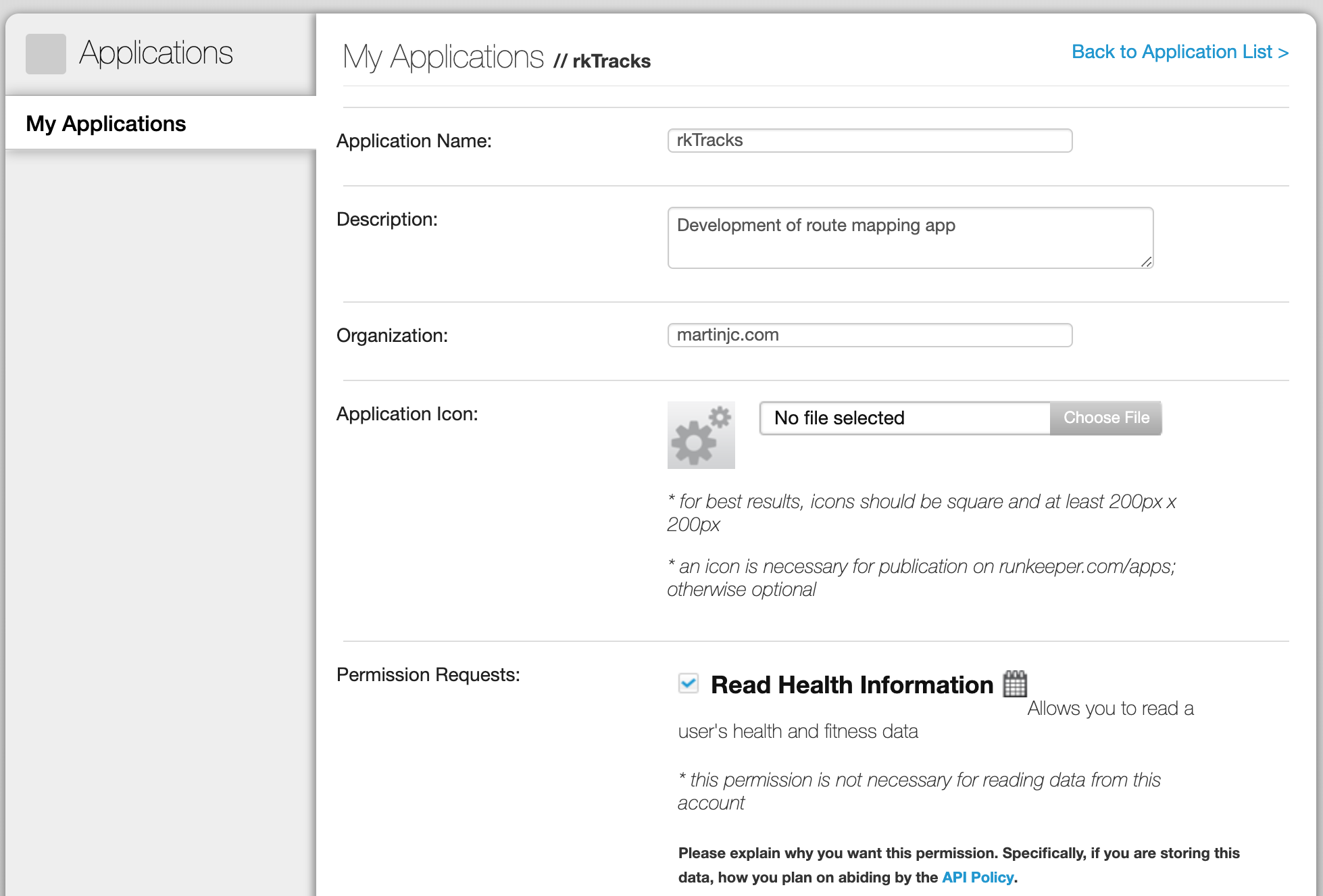
Runkeeper has an API, and if we’re going to pull our data out of the service the first thing we need to do is sign up to use it, which you can do at the Health Graph website. The link to sign up is buried slightly in the documentation - but you can sign up to create an app at https://runkeeper.com/partner/applications. You need to enter a few details for an application - as we’re only going to be using this for accessing our own data it doesn’t really matter what information we put in here:

App Registration

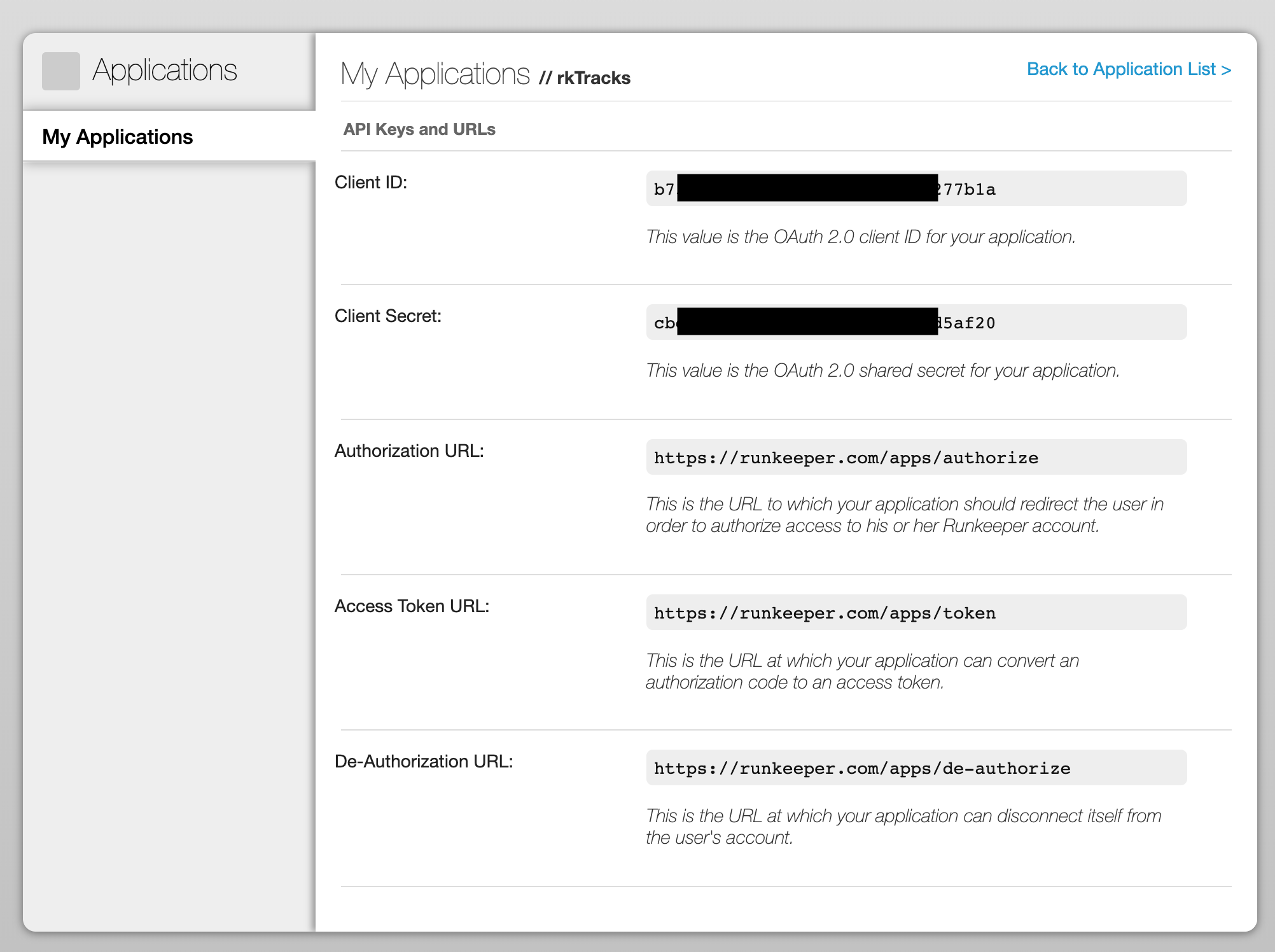
Once we’ve signed up and got access to the API, we are provided with a client_id and a client_secret. These are the OAuth keys that identify our application to Runkeeper:

Keys

To access user data from Runkeeper we need to follow a typical OAuth flow. We open a URL, sending Runkeeper our client_id and client_secret. Runkeeper asks our user to login and give our application permission to access their data. They then send us back to our redirect address with a single use access_code. We can then make a request to Runkeeper and exchange this access_code for an access_token. This token will allow us to make requests to the Health Graph API and access the data of the user that authorised our application. If we were building a public-facing application we’d need to write a bit of server code and get it online somewhere to handle this flow, but for our purposes here we only need to authorise ourselves, so we won’t bother and we’ll do it all manually.

Putting together the first request URL is quite straightforward:

from _credentials import client_id, client_secret, access_token

DATA_DIR = os.path.join(os.getcwd(), "data")


def get_auth_url():
# create an authorisation url to copy paste into a browser window
# so we can get an access token to store in _credentials.py

base_url = "https://runkeeper.com/"
endpoint = "apps/authorize"
params = {
"response_type": "code",
"client_id": client_id,
"redirect_uri": "http://www.martinjc.com",
}

auth_url = base_url + endpoint + "?" + urlencode(params, quote_via=quote)
return auth_url

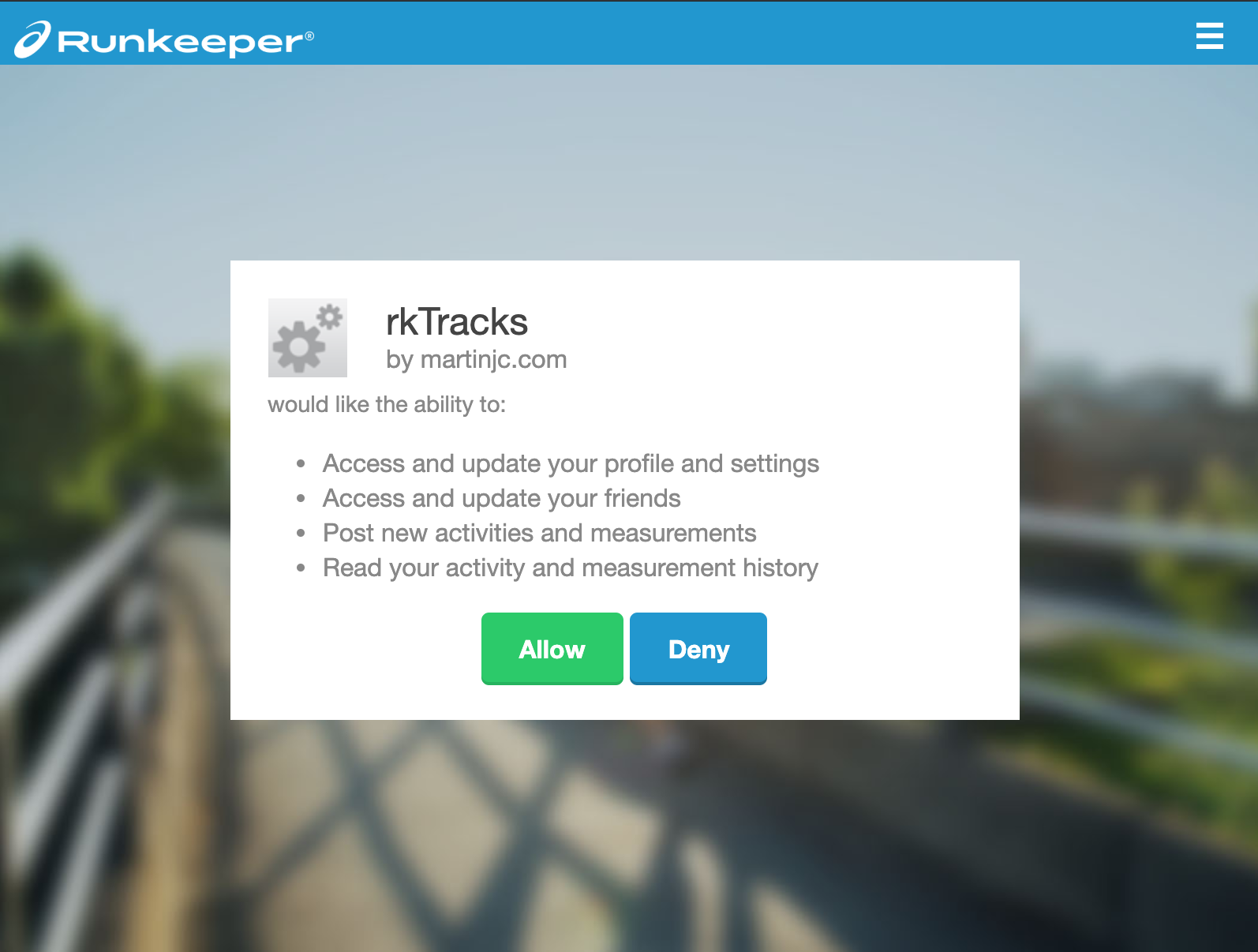
Once we have the auth_url we can open it in a web browser. This will open the Runkeeper website and ask us to give permission to our application to access the necessary data:

undefined

If we authorise the application, it will send us back to our redirect URL. A proper server would listen for these requests coming in, capture the code provided in the address bar and carry on with the authentication flow. Again, we’re just doing it manually, so we’ll just copy and paste that code out of the address bar so we can use it in the next step of the process:

def do_auth():

base_url = "https://runkeeper.com/"
endpoint = "apps/token"
params = {
"grant_type": "authorization_code",
"code": "CODE_WE_JUST_COPIED",
"client_id": client_id,
"client_secret": client_secret,
"redirect_uri": "http://www.martinjc.com",
}

r = requests.post(base_url + endpoint, params)
print(r.json())

If all is well, the response from the server will contain the access token we need to make authenticated requests to the server.

We can then use this access_token every time we need to make a request to the API:

def get_data(endpoint, params=None):

base_url = "https://api.runkeeper.com/"
endpoint = endpoint

headers = {"Authorization": "Bearer " + access_token}

r = requests.get(base_url + endpoint, params=params, headers=headers)
if r.status_code != 200:
return None
return r.json()

The above function will make a request to the given endpoint (and assuming it succeeds) will return the data back to the calling code. If we want to get the list of all activities for the user, we can use this function like so:

def get_fitness_activities():
# store activity URIs separately
with open("activities.json", "w") as activities_output_file:

activities = []
activity_data = get_data("fitnessActivities")

num_activities = activity_data["size"]
num_calls = int(num_activities / 25)
call_count = 0

if activity_data.get("items"):
activities.extend(activity_data["items"])
print(call_count, len(activity_data["items"]), len(activities))

while activity_data.get("next") and call_count < num_calls:
activity_data = get_data(activity_data["next"])
call_count += 1

if activity_data.get("items"):
activities.extend(activity_data["items"])
print(call_count, len(activity_data["items"]), len(activities))

json.dump(activities, activities_output_file)

The list of activities in the Health Graph is paginated, so we need to call the endpoint repeatedly, fetching each page of activities.

Once we have downloaded the full list of activities, we can then download the full details of each activity. The API is rate-limited to 100 calls every 15 minutes per user, so we’ll put the code to sleep for 9 seconds between calls to ensure we don’t go over the rate limit:

def download_activities(activity_list):

for activity_uri in activity_list:
id_str = activity_uri.replace("/fitnessActivities/", "")
filename = os.path.join(DATA_DIR, "%s.json" % id_str)
if not os.path.exists(filename):
activity_data = get_data(activity_uri)
time.sleep(9)
if activity_data is not None:
with open(filename, "w") as output_file:
json.dump(activity_data, output_file)

And that’s it. Run the code, give it enough time, and you’ll end up with all your activity data downloaded from Runkeeper. Easy.

The full code for the script is below, or in this gist here.

Academic Parent

November 29, 2017

I, like many others, made note of a recent tweet by Nathan Hall discussing the attitude of his colleagues when he prioritises family over career:

The ensuing thread revealed plenty of people who felt the same way or who had experienced the same reactions and attitudes in their own place of work.

It made me reflect upon the level of privilege I have to work somewhere where I can genuinely say that this is not my personal experience. Since my son was born I have been working from home one day a week in order to both save on childcare costs and to get some quality time with him. When he was a small baby, this really was working from home, punctuated by periods of playing with/feeding a small baby whenever he woke up from one of his many, many naps. As he’s got older the amount of work I do on a Friday has decreased massively, but thankfully my job is flexible enough that I can take up the slack by working longer days, or committing some time in the evenings and weekends. The important thing is that I’ve never felt the need or pressure to work more than a ‘usual’ working week. I’m not one of these academics who feels they must work 60+ hour weeks, and I never will be. I love my work and enjoy what I do, but ultimately my family and home are far more important and far more enjoyable.

After my daughter was born we (my wife and I) rearranged our work schedules, as she was missing out on the time I had with the children on Fridays. As a result, we both now work a half day on Friday, swapping over at lunchtime. This allows us both a few hours alone time with the children, and by each working slightly longer hours the other four days of the week neither of us struggle to get our hours in and get the job done.

This has always been an informal arrangement; although my employer offers formal flexible working which I could apply for and am fairly sure I would get, I’ve never bothered. Despite this, my colleagues are supportive of my working arrangements, and I’ve never been pushed into attending a Friday meeting or been questioned on why I’m not in the office five days a week.

The message has also been given by those higher up in the University. During a training course recently, one of the Pro-Vice Chancellors of the University made the point that at the end of the day this is only a job, and other things are more important. It’s nice to know your own view is held by (at least some of) the levels of upper management too.

From the comments and discussion around Nathan’s tweet, and from speaking to colleagues around the world it seems like sadly some of my experiences of life in academia are atypical, and this is a real shame. Whether it’s a systemic structural issue to do with workloads in academia or a form of societal pressure, I do feel we can improve as a profession in supporting those colleagues for whom work is not the sole driving force.

DataJConf Debrief

August 5, 2017

DataJConf at UCD

A month ago we held the first European Data and Computational Journalism Conference in Dublin, Ireland. This is a long overdue post about that event.

The conference idea started as all good ideas do, in the pub and with a tweet. It was at a social event during ICWSM '16 where I was first introduced to Bahareh Heravi, a data journalism lecturer from UCD. We talked briefly about the things we’re doing in Cardiff with the CompDJ MSc, and she spoke about her plans to introduce something similar in Dublin. A long time passed, and she got in touch over Twitter to ask if I was interested in organising a conference with her, to cover Data and Computational Journalism. Always keen to say yes to things that aren’t technically part of my day-to-day job and that will cause me a lot of work, I jumped straight in, dragging m’colleague Glyn along for the ride.

We spent several weeks having Skype calls to discuss and plan the conference, getting a website together, releasing the call for papers, organising the programme committee, managing the reviews, selecting talks, creating the programme, and then getting tickets on sale for the conference. It was a bit of a mad rush, but by June we were starting to see tickets sold, and had an excellent line up of speakers for the day. All I had to do then was sit back and wait to see if people turned up. Bahareh had less of an easy time, as she was hosting the thing, so spent many hundreds of hours organising the logistics of the event, the catering, lanyards, bags, souvenirs and all the other things that go into making a successful conference - a huge amount of work for which we are truly grateful!

When we initially spoke about the conference, we wanted to make sure we had a mix of industry and academia, and that it really was a mix. Bahareh had had a disappointing time at another DataJ conference where an academic track was included, but kept totally separate from the industry track, which resulted in a lack of discussion between the two groups of participants. This was something we were determined to avoid at all costs. We were also unsure about whether there was an appetite for this sort of conference. Our initial aim was that if we had about 50 people turn up, we’d count it as a success. In the end, we had just over 100 people through the doors, which was amazing, and there was a real mix of people from academia and industry. There was a diverse set of talks, on a range of topics, and it was really nice to see industry types asking questions of the academics, and vice versa. We also avoided the dreaded ‘all-male’ lineup, with a majority of talks being given by females. The proceedings from the conference are now available, if you’re interested.

The conference was followed by a couple of half-day workshops: an introduction to Data Journalism, and an Unconference, both of which were received very well.

All in all, a really successful event. I met a lot of interesting people and made some good contacts for the future. There were a lot of interesting discussions and I came home full of ideas for things to introduce within our teaching and research.

It was such a good time, we’re doing it all over again. DataJConf 2018 will be held here in Cardiff. So I guess this time it’ll be Glyn’s turn to do all the running around organising things…

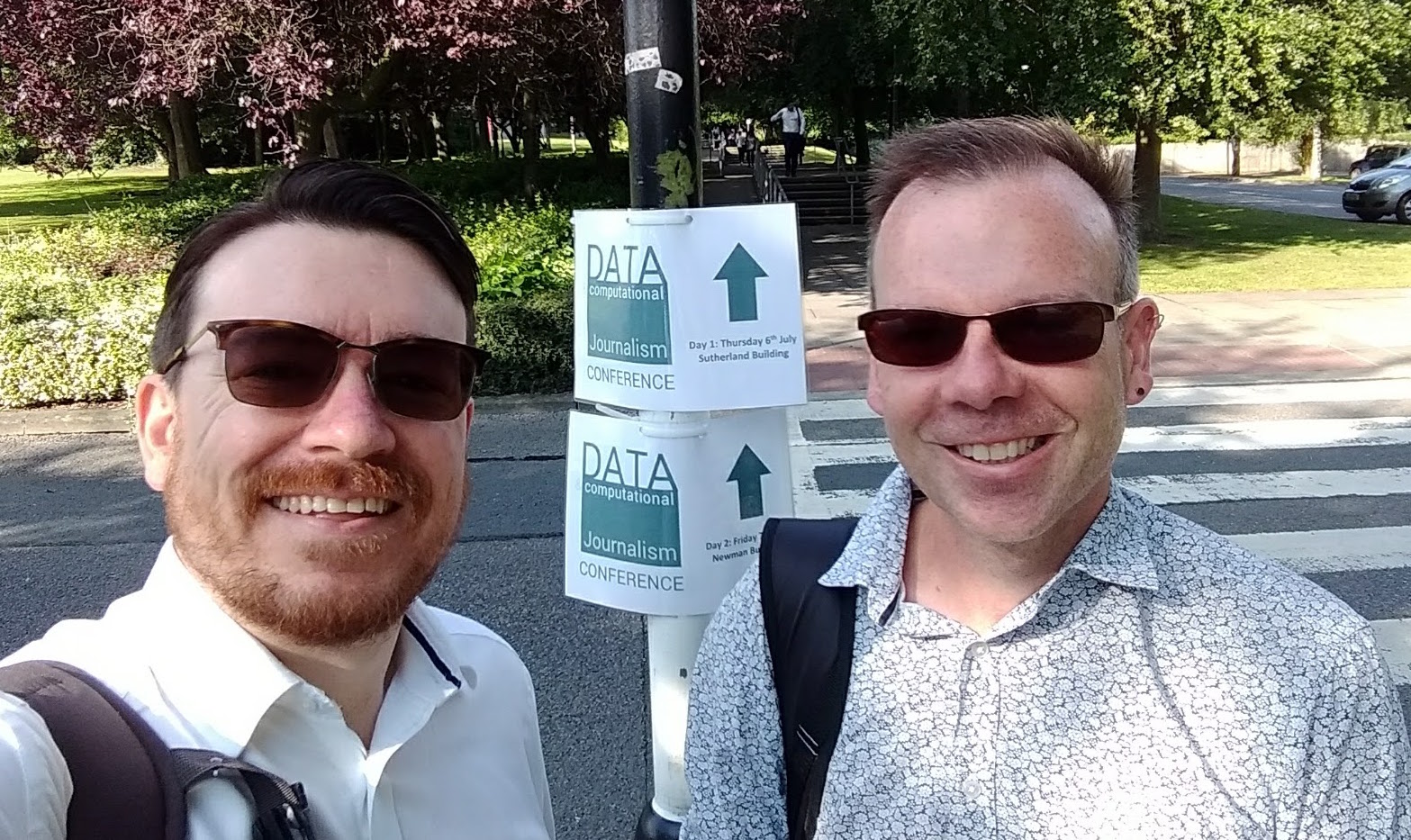
CompDJ Team Selfie

Post-Graduation Thoughts

August 4, 2017

Last month I took part in my first graduation ceremony as part of the academic procession. This is the bit where staff members from the school(s) that are graduating get dressed up in their silly robes, ‘process’ into the graduation ceremony, and sit on stage for an hour or so clapping as all their students stride across the stage to shake the VC’s hand and graduate from their degree.

It’s a lot of fun, because who doesn’t like dressing up in silly robes and a hat? But its also good for the students, I think it shows them that we genuinely care about the fact they’re graduating, and it’s nice for them to see familiar faces up there on the stage celebrating their hard work. I know I enjoyed that part of my own graduation, so I’m happy now to be able to take part myself. I actually went to two ceremonies this year; the ceremony for the School of Computer Science & Informatics, and the ceremony for the School of Journalism, Media and Cultural Studies.

In both ceremonies I was really happy to see a number of students that I know and have taught. In the COMSC ceremony there were a lot of MSc students from the various programmes from my second year of lecturing the Web Apps and the Visualisation modules. There were also a couple of students whose dissertation projects I supervised, and a few undergraduates who I’ve worked with on summer projects. Then in the JOMEC ceremony this was the first year that we’ve had students from the MSc in Computational Journalism attend the graduation ceremony, which was really nice. I had a nice feeling of pride as they read out the name of the degree programme I helped create, then more as the students strode across the stage.

It’s really pleasing to see students you’ve taught start making their way in the world. Even more so when you see them creating great work and doing interesting things in ‘the Industry’. Take one of our first students Charles, who’s followed a successful stint at Trinity Mirror with a move to go push things forward at The Bureau Local. Or one of his colleagues Nikita, who’s working at one of the first data journalism outfits in India. Or last year’s grad Niko, who after a successful Google News Lab fellowship at The Guardian last year is now working on their vis team. Even this year’s students are at it before they’ve even finished: Jess is busy on a GNL fellowship for Trinity Mirror, Laura is on an internship at The Telegraph and Haluka is doing the same at The Financial Times. Four of this year’s students have job offers already, with Rae having left for the US to go run the Springfield bureau of The Daily Line.

It’s a bit weird, knowing that a few years ago we had an idea that we needed a course to train people to do a thing, and now there are people out there doing just that thing. It’s exciting, and I’m looking forward to seeing more of it.

Thoughts from the CEI Learning & Teaching Conference 2017

July 5, 2017

Yesterday was the annual ‘Learning & Teaching Conference’ of the Cardiff University Centre for Education Innovation. This year the theme was ‘To Tech or not to Tech, is that the Question?’. It’s the first time I’ve attended this conference, and I thought I’d get some of my thoughts from the day down in pixels.

(Reading this back later, I realise what a tangent this went on. From “I’m going to review #CUCEI17” to “there are some teachers out there that could do better but I don’t know how to help them”. That was a quite a diversion, for which I apologise. For an actual summary of the conference there’s a great storify of the main discussions during the conference which I think sums it all up very nicely.)

It was a very interesting and at times thought-provoking conference. I felt the main thematic question was solved fairly early on, perhaps even before we entered the room. I think most of us realise it’s not about the tech, it’s about the teaching, and the tech is just one tool in our toolkit that helps us do that effectively. The answer to the question is therefore ‘no’ and the real question is: ‘what tech and how much?’.

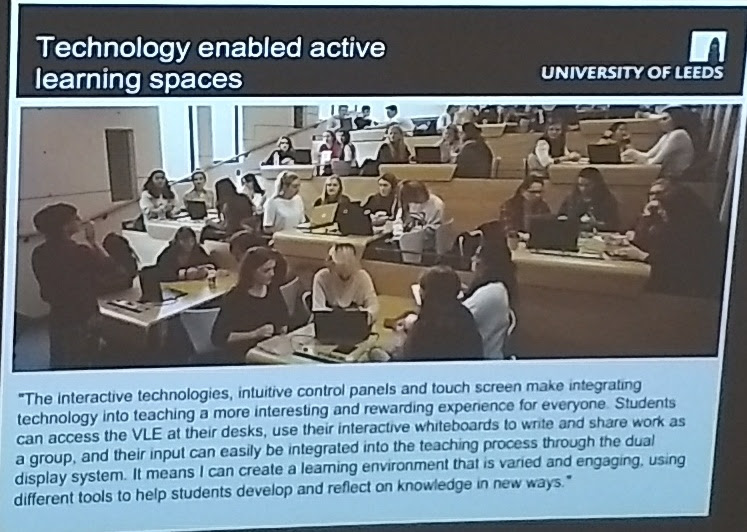
The keynote was an interesting look at how technology can be embraced by a whole institution, but I think what really caught my attention during this talk (with one eye on our new building with MATHS) was the lecture theatres that are arranged for group work:

Learning Spaces

How fantastic would it be able to teach in that space - you could do so many activities beyond just standing at the front ‘lecturing’. I’m becoming more and more vehement in my belief that a traditional ‘didactic’ lecture is the wrong way to teach most topics in Computer Science, and is actually harmful to our student’s ability to learn and think independently. Breaking the link between the idea of a ‘lecture theatre’ and a ‘lecture’ would be a good start towards changing the way both staff and students think about these things we call ‘lectures’. One of the frequent comments I’ve heard (and apologies to whoever said it as I can’t remember who it was - possibly Vince or Dafydd) is “wouldn’t it be great to have lecture theatres that don’t have a ‘front’”. I can’t agree more.

But of course, this, a lecture theatre with a funky design, isn’t technology. Yes, the group tables can be tech-enabled, with power and interactive displays and all sorts of other gadgets and gizmos, but really we’re just talking here about rethinking our way of teaching to a more interactive, collaborative (and collectivist?) paradigm.

This is where I think the problem comes in. Show a lecture theatre like that to a room full of academics who have all managed to carve out the time to attend a conference on education innovation and of course they’re all going to start thinking ‘Wow, the things I could do with that’. We’re the same people who are already trying to innovate in our teaching. We used lecture capture as soon as they put webcams in our classrooms (or even before). We’ve tried out all the polls and live Q&A systems during lectures. We’re creating long-lasting communities for our students in Slack, asking them to text in questions during lectures, and open-sourcing our lecture materials. We’ve already moved past an “I’ll stand at the front and talk, you sit there and listen” model of teaching. Some have stopped ‘lecturing’ entirely, are fully committed to a flipped learning model and now spend all our contact time on interacting with students, working on activities or problems, and really delivering ‘value’. The conference in this regard was preaching to the choir. Yes, it was helping those of us keen on innovation to discover new tools for our toolkit, talk to other like-minded teachers, and to validate our own approaches, but it wasn’t really attempting to answer the big problem in our own work: How do we convince everyone else to change with us?

Because the big problem isn’t with the people who are trying to innovate. The problem is the academic who doesn’t want to do any of that stuff. The academic who thinks “well, I learnt through traditional lectures, so that’ll be fine for all these students”. I actually had a colleague say to me the other day “I learnt from a book, so I don’t need to make videos for my students. They can just read the book like me”. They generally didn’t realise the benefits that can be had by moving the passive learning to non-contact time and creating an active learning environment within their lectures.

We have stuffed universities with the kind of academics who don’t realise that they’re there because they’re the sort of academically minded studious individual who could have taught themselves off some notes scribbled on the underside of a table if they had to. Anyone who’s dragged themselves through three years of undergraduate education, a year of masters, three to five years of a PhD, and a probable multitude of short-term RA contracts on many different topics before finally reaching the relative stability of a lectureship is going to be the kind of person who can learn things themselves and quickly in whatever circumstance. They don’t know what it is to be the person who struggles in class, or who finds things difficult, or who just doesn’t respond well to a fifty minute ‘lecture’.

We have a situation where people who have no difficulty in learning are having to teach.

And I find that that means they have no desire to try to do things differently, because the way they’re doing things “worked for them”. So how do we communicate to these individuals that actually ‘it worked for me’ is not a valid argument. How do we show them that there is a better way? That they can actually engage with students in a more meaningful fashion? How do we make them understand that

Just reading from a fucking powerpoint is not education.

Those are the questions I want answered next.

Catching a Bug

June 12, 2017

I’m doing some data analysis, and I just caught a showstopper of a bug. Want to see it? Here’s the code as it was before:

new_index = [LIKERT[value] for value in LIKERT.keys() if value in data_counts.index]

and here’s a simple fix for the code:

new_index = [LIKERT[value] for value in data_counts.index]

Doesn’t look like much of a problem, but it completely changed the way my data was analysed. Both lines are creating a new index for a pandas dataframe. I have a dataframe that is indexed:

[0.0, 1.0, 2.0, 3.0, 4.0, 5.0]

and I want to replace the index with the correct names from a likert scale that these values refer to:

['N/A', 'Disagree Strongly', 'Disagree', 'Neither Agree nor Disagree', 'Agree', 'Agree Strongly']

so I create a dictionary that maps from keys in the first index, to values for the new index:

LIKERT = {
0.0: 'N/A',
1.0: 'Disagree Strongly',
2.0: 'Disagree',
3.0: 'Neither Agree nor Disagree',
4.0: 'Agree',
5.0: 'Agree Strongly'
}

I then do a little list comprehension that adds the correct new value to the new index, if it’s key is in the old index. If the key isn’t there, it gets skipped:

new_index = [LIKERT[value] for value in LIKERT.keys() if value in data_counts.index]

All fine, right? Sure, if the index is always in numerical order. Which it isn’t. Using this code, if the index is in the wrong order, you can get ‘5’ being replaced with ‘Disagree Strongly’ (or any of the values other than ‘Agree Strongly’) and suddenly your analysis is completely wrong.

The second line fixes this by looping through the index, not the dictionary, and so creates the new index in the correct order.

A better fix is actually to use the .rename() function, which can rename the index of a dataframe (or the column names) using a dictionary as a lookup, like so:

data.rename(index=LIKERT, inplace=True)

Any values present in the index but not in the lookup are left alone, and values in the lookup but not in the index are ignored, and the result is exactly what I need, all my ‘5s’ replaced with ‘Agree Strongly’ and so on.

So I guess the lesson learnt here is RTFM, and don’t try to be clever and re-invent functionality that already exists.

Weeknotes - 29th May 2017

June 4, 2017

Monday 29th May

BANK HOLIDAY, innit

Tuesday 30th May

OH GOD, NOW I’VE GOT A DAY LESS TO DO EVERYTHING!

Finished my visualisation coursework marking today. Generally really good quality across the board, and a really enjoyable set of work to mark. As time goes on, I’m liking this visualisation course more and more. It’s fun to teach as it’s an interesting and quite subjective field, which is not usual in a ‘normal’ Computer Science course. There’s lots of scope for discussion and argument and plenty of chances for students to really get stuck into some data analysis and communication and really show off their skills. I get the feeling the mark distribution skewed a little higher than last year, but I haven’t checked that yet.

Also met with the last student who has expressed an interest in our CUROP project for this summer, so we’ll be able to make a decision on that soon and get that project rolling. I also met with another of our CompDJ students about their dissertation project - they’re looking to build a bot that will write articles automatically about particular topics. A very ambitious project, but one that looks to be really interesting.

The other major task on Tuesday was a Skype call with the rest of the organising committee of DataJConf to finalise the accepted talks and sort out the schedule. We had a really great set of submissions, with a good mix from industry and academia. Our programme committee did a great job of reviewing them, so it was a fairly simple task to conduct a quick meta-review of the papers, decide where our cut-off point is and then take the top 8 papers forward to the conference. Sadly the fact that we’re only one-day main track this year meant we had to lose some very good submissions, but I’m hopeful those authors will still come along and pitch their discussion topics for the Unconference on the day after DataJConf (and we invited them to in their notification emails). The schedule is now online, and it looks like it’s going to be a really good day. Tickets are selling, and the attendee numbers are ticking up. We were supposed to make a decision this week on which room to go for, the big room or the bigger room, but we put that off to see how numbers look in a weeks time. It’s a bit of a gamble as there’s always a chance that if we need to switch from the room we already have booked the other room will be unavailable by the time we make our minds up, but who doesn’t like a bit of risk in their conference planning?

Wednesday 31st May

A day in which very little was accomplished towards my own goals, but which had to be done. Most of the morning was taken up with a meeting with my counterpart in undergraduate operations, the school manager, and various faces from college about our generally low survey response rates in the School, and how we might do better at communicating with students to foster a culture that encourages these response rates to improve. One of the key points we came up with was that while we’re very good at listening to students as a school, and then acting upon their feedback, we’re pretty rubbish at communicating those actions and changes back to the students. The outcome of this discussion was a need to empower the operations teams for postgrads and undergrads to do more with the various surveys and module feedback questionnaires, to bring actions and recommendations to the teaching and learning quality committee and boards of studies, and to work with the comms team to make sure students know that what they tell us is listened to and acted upon, and is therefore quite important. Essentially it’s about a culture change within the school, and we all know how easy that is, right…

Also had some interesting discussions with my Head of School today about a number of projects I’ve got going on at the moment. I already wrote about trying to coordinate the large number of new programme / programme change approvals that we have happening within the school, but we also discussed a couple of other projects. One, looking at end-of-module feedback has been going on for a while but is close to being ready for launch. The other was around module-review, and how I want to improve that process by moving to a git based approach, which will allow better oversight and review of module changes and data collection. I’ll talk more about that as the project develops.

At lunchtime we had our first official meeting with Stuart, our third-year student who is working with us for the summer on our Education Innovation chatbot project. He seems to have really hit the ground running and is getting stuck in to building code and designing solutions. Really great to see, and it looks highly likely that we’re going to have something working to test with students in the Autumn.

The afternoon was taken up with an Academic Approval Event in the School of Modern Languages. I was on the panel as the internal member from outside the college. It’s the second approval event I’ve done, and was a fairly pleasant experience. The programme we were looking at was well thought out, and would clearly be a benefit to the school in question. There were the usual typos and small inconsistencies in the documentation, and we had some recommendations that might improve the student experience, particularly around assessment, where there were a lot of essays that might be replaced with some more interesting types of assessment. Overall though it looks good, and I hope they make a success of it.

While all that was going on, we were hosting a hackday over in Bute, a collaboration with The Bureau Local. A team came over from The Bristol Cable and along with our students spent the day looking at voter numbers within local constituencies. I wrote a tiny write up over at the CompDJ blog, but I was a bit annoyed I couldn’t get more involved, what with everything else that was going on yesterday. Hopefully I’ll be able to get stuck in at the next one, as I’m sure this wont be the last hackday type event the Bureau organises.

Thursday 1st June

Today was spent interviewing students for another of our summer projects, looking at Journalism Education. We’ve been carrying out a data collection experiment since last summer looking at the skill requirements of the media industry as exposed through job advertising and mailing list postings, and now we’re looking to back that up through a qualitative analysis of journalism school educators and their syllabi. We had 12 students from a range of schools express an interest in working on this project with us, and choosing between them is a very hard task indeed. Luckily m’colleague is leading this project, so most of that particular burden falls on him. Hopefully we’ll have someone in place very soon and we can get the third of our summer projects up and running.

Friday 2nd June

Y.A.D.A.F

Sunday 4th June

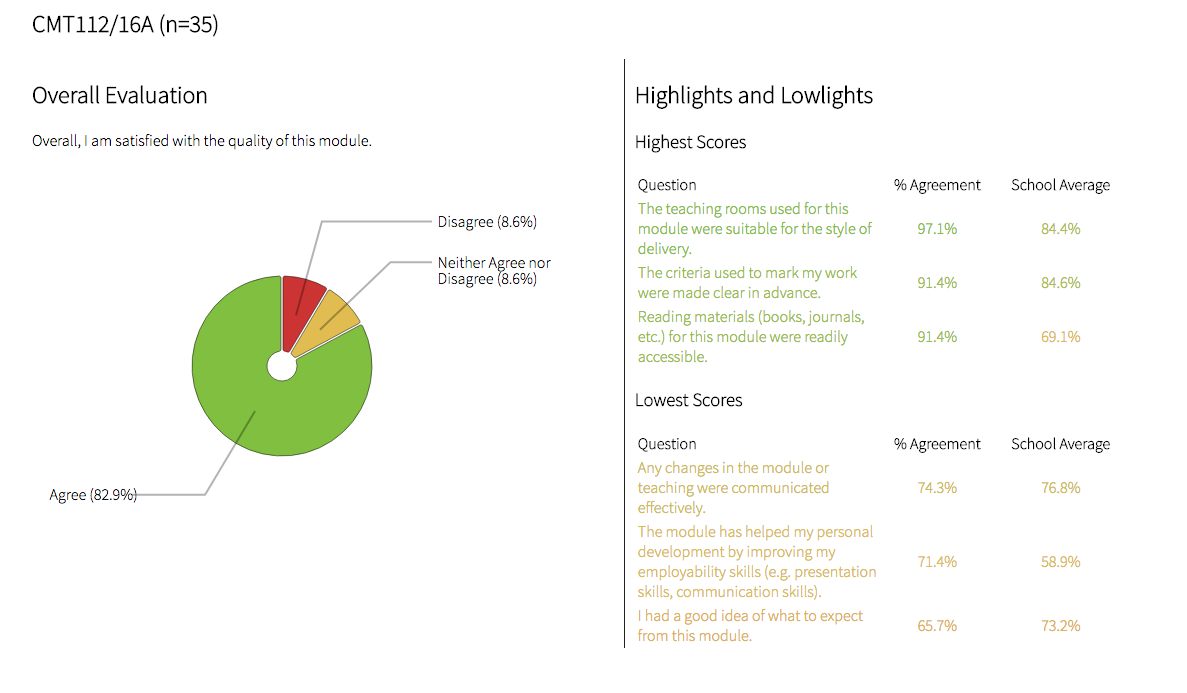
My ‘Friday’ was spent working on some analysis of module evaluation feedback. As I mentioned in Tuesday’s notes, we need to do more and better with the feedback given to us by students. I’ve been working for a while on creating some simple dashboards that transform the quite poor output of the module evaluation system into something that is firstly a little more usable by module leaders, but that also looks more like the survey dashboards (NSS, PTES, etc) that we are used to dealing with.

Module Evaluation Dashboards - WiP

The idea is that consistency between the types of visualisations and analysis used will reduce the cognitive burden when trying to assess the feedback and compare across surveys. I’m now starting to put together a system that will create individual dashboards for lecturers and module leaders, and that will also allow comparison between modules on the various programmes and years of our degree schemes, and allow comparison to the school as a whole. With any luck I’ll be able to present this at the next TLAQC and we can start to deliver these to lecturers and operations teams to help them understand what the students are telling them. Today was mostly refactoring my existing analysis code that takes the raw survey data and converts it into percent agree/disagree scores as per the NSS dashboards, and collects the data across the different groupings (years/programmes) of modules.